Sharpie Draw on Body Body Positivity Hair


Editor'southward Note:This month, that isJuly 2020, FII's #MoodOfTheMonth isFeminism And Trunk Image, where we invite diverse manufactures about the diverse range of experiences which we often confront, with respect to our bodies in individual or public spaces, or both. If yous'd like to share your article, email united states at pragya@feminisminindia.com.
Our human relationship with our bodies is a difficult one. It takes time to understand how they operate in the public and private spaces. They become an fifty-fifty more contested infinite when it comes to women. Women's bodies are constantly under surveillance, both in public and private spheres and are monitored per the male gaze. Among the thousand issues that threaten women's bodily autonomy, is the constant perpetuation of the idea and myth of an 'platonic, beautiful and desirable' woman. The ideas of dazzler are Euro-centric, a 'cute' woman is 'fair, thin-bodied, with long hair, and without any scars or marks' and this idea is continuously reinforced.
Women are depreciated for their appearances and are fabricated to strive for a 'perfect' body and appearance, leading them to monitor their bodies, to depression-self esteem which fifty-fifty crusade mental wellness issues and eating disorders. Abiding surveillance of their bodies and pressures to look a certain way strips women of their actual autonomy and shapes their bodies under a patriarchal image of a woman.
Many forms of media, particularly movies and advertisements, play a very important role in representing certain kinds of women—women who fit into the definition of beingness 'attractive'. Constant exposure to the idea of a 'cute' woman leads to a woman striving to become that 'moving picture-perfect' epitome reinforced by the media. What happens in the process is that women start hating their bodies considering it is not similar to what they come across in popular civilisation.

A counter to this thought of a 'perfect' woman was presented on social media, with the body-positivity motility. The motto behind the movement being that all bodies are cute, fat is not 'ugly' and being healthy is not necessarily associated with body weight. Thus, information technology aims to put forward a natural and a existent idea of how women look like and promote a civilization of self-dear and healthy body image through the medium of social media. It is through this movement, that the notion of 'loving your body' was introduced, aimed to encourage women to love their bodies, no matter what order tells them about the aforementioned. While this was a welcome change and gave women a rubber infinite to limited and love their bodies, loving our bodies isn't a solution to trunk image issues.
Other than the torso positive movement being completely hijacked by capitalistic ventures to sell their products, loving your trunk is an aspect of discourse around body positivity which puts the pressure of dealing with trunk paradigm issues on the adult female itself. It loses focus of the fact that body paradigm issues in women (and men) are securely entrenched in systems of patriarchy and capitalism working together. While patriarchy keeps women nether abiding pressure level and insecurities of looking 'desirable', commercialism profits off those insecurities.
Other than the body positive movement being completely hijacked past capitalistic ventures to sell their products, loving your torso is an aspect of discourse around body positivity which puts the pressure of dealing with body image issues on the woman itself. Information technology loses focus of the fact that body image issues in women (and men) are securely entrenched in systems of patriarchy and capitalism working together. While patriarchy keeps women under constant pressure and insecurities of looking 'desirable', commercialism profits off those insecurities.
Michel Foucault described bodies as 'docile', which are shaped by power and deed as surfaces upon which hierarchies and cultural norms are inscribed. A feminist understanding of the bailiwick explores how women's bodies are forced to comply with certain norms well-nigh sexuality and appearances. The ability here transforms into the aesthetic ideas—sparse torso, fair peel, long hair, no body hair—which produces desire for the male gaze and transforms into a norm for what is considered attractive and desirable. Other than being 'sites for male want', women'south bodies are constantly subjected to comply with the myth of being 'beautiful' equally means to command them and constantly exercise power over their bodies.
Widespread notion of westernised standards of beauty is a result of global commercialism, that sold women the idea of a 'perfect woman', which is unattainable, and thus leaves women with even more than bug with their bodies. So capitalism and patriarchy again profit off those same insecurities. It'due south a vicious bike. Media facilitates through advertisements, movies, TV Shows, ramp walks, and even social media. This bicycle survives on body image problems which stem from constant dissatisfaction and blues from not being 'perfect'. Dazzler and nutrition products are some of the biggest examples of a backer and patriarchal system that directly benefits from women'due south insecurities. The perpetuation of a sure trunk blazon equally the 'norm', becomes a part of the family and social life.

Body image issues do not only affect the mental health of women, only as well have very far-fetching impacts on their economical and social life. Fat women are much less probable to go employment, especially in careers related to performing arts and acting, considering they are considered 'unhealthy'. Fatty women also experience a lot of medical bias as most of the time they are told to just 'lose weight' to treat health bug, which leads them to not getting proper treatment.
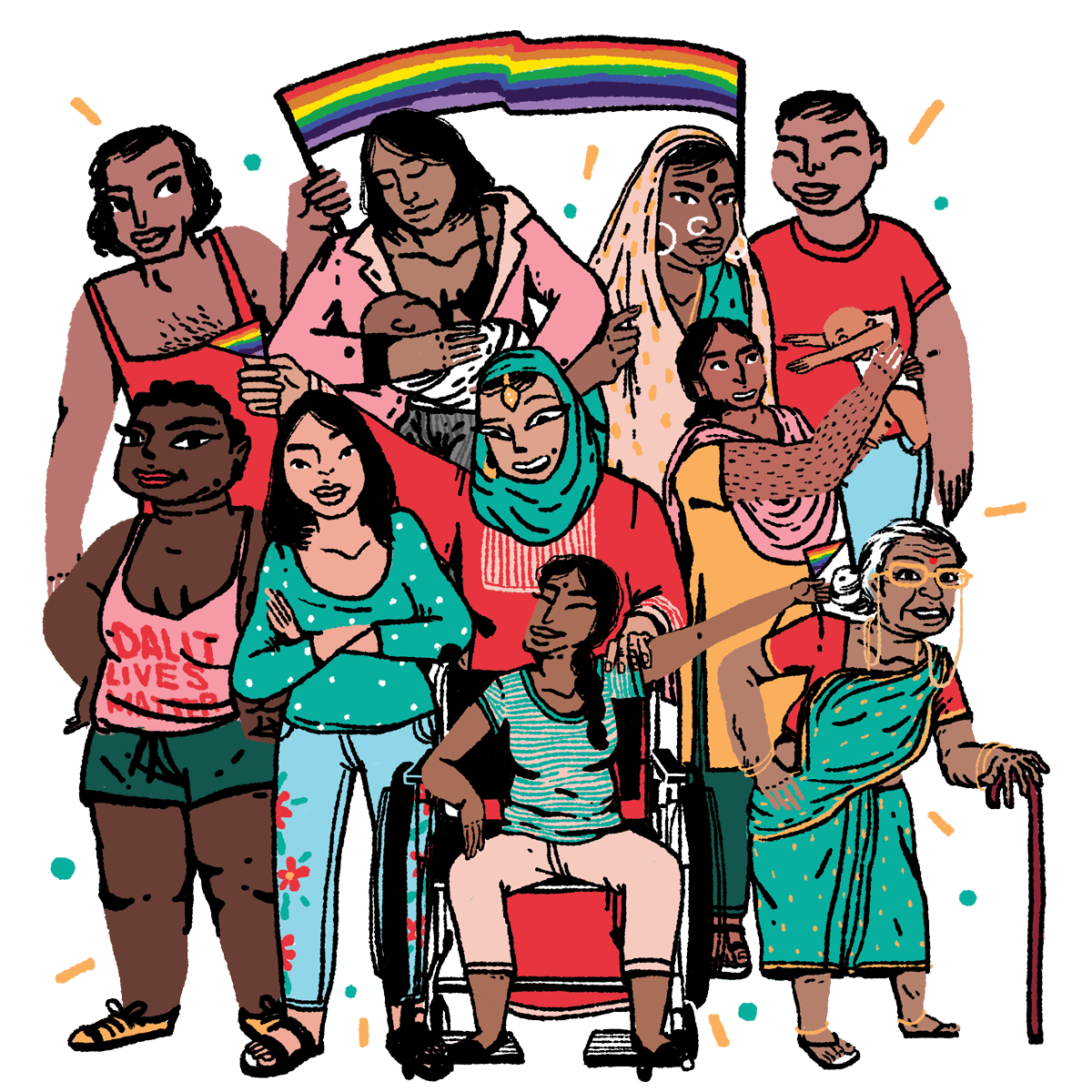
In a land like Republic of india, skin colour is an of import marker of 'caste' and becomes the basis for a lot of bigotry and degree-based violence. Being 'off-white' is related to being 'successful' because it is a marking of 'upper caste' and colonial standards of beauty. Women are constantly mocked for their appearances, as what they look like becomes a significant marking of their identity, and not their piece of work, career or achievements. The discrimination becomes even more acute when it comes to transgender bodies and/or disabled bodies.
Trunk epitome issues are not just nigh hating your torso; it is about a deeply entrenched arrangement that benefits off of women's insecurities and is a office of all aspects of our lives. This is not to say in that location is anything incorrect with loving your body, and information technology does to some level break the barbarous cycle of capitalistic profit, based on women'south body image issues. If you beloved your body, who won't recall you are imperfect and thus won't buy the products they are trying to sell. All the same, one cannot love their body all the time, which can as well ofttimes turn emotionally exhaustive.
Herein lies another trouble of body positive motility'southward emphasis on 'self-love' and 'loving your torso'. Torso prototype problems are non just near hating your body; it is most a deeply entrenched system that benefits off of women's insecurities and is a function of all aspects of our lives. This is not to say at that place is anything wrong with loving your body, and information technology does to some level suspension the fell cycle of capitalistic profit, based on women'due south body image problems. If you love your body, who won't think you are imperfect and thus won't buy the products they are trying to sell. All the same, 1 cannot love their trunk all the time, which can likewise oftentimes turn emotionally exhaustive. Sometimes yous do not like your body, and that should not mean that capitalism and patriarchy have the right to benefit from it.
Response to body positive movement and its exhaustive force per unit area on self-dearest was countered by 'body-neutrality', which is an extremely refreshing movement looking at women's achievements that has zilch to do with their appearance. It completely lifts the focus off of a woman's trunk. It focuses on the thought that the body doesn't define a person and gives space to people who exist on the margins, without the pressure of loving one's body.

It is an important motion, but there is a need to constantly bank check where the motility is going and who does it do good. It becomes difficult to be 'neutral' towards one's body when it is constantly being put under surveillance and being discriminated against. Information technology is easier for thin bodies to exist neutral than fat bodies considering being 'fatty' becomes a constant attribute of life that they have to alive with. Moreover, a lot of these movements get appropriated by corporate companies that participate in performative activism to sell their products, rather than making changes in the organization. The recent news around 'Fair and Lovely' changing its name to 'Glow and Lovely' is an example of the same.
As well read: It Is Absolutely Okay To Non Be Cute — Here Is…
Both body positive and body neutrality movements accept brought substantial changes in providing people with a infinite to talk nearly body image issues and representing a diverse set of women, even in mainstream media outlets. We have come a long way, and we accept a long manner to become and it requires the states to sympathise the root causes of trunk image issues.
Featured Epitome Source: Feminism In India
Follow FII channels on Youtube and Telegram for latest updates.
Source: https://feminisminindia.com/2020/07/21/loving-bodies-wont-solve-body-image-issues/
0 Response to "Sharpie Draw on Body Body Positivity Hair"
Post a Comment